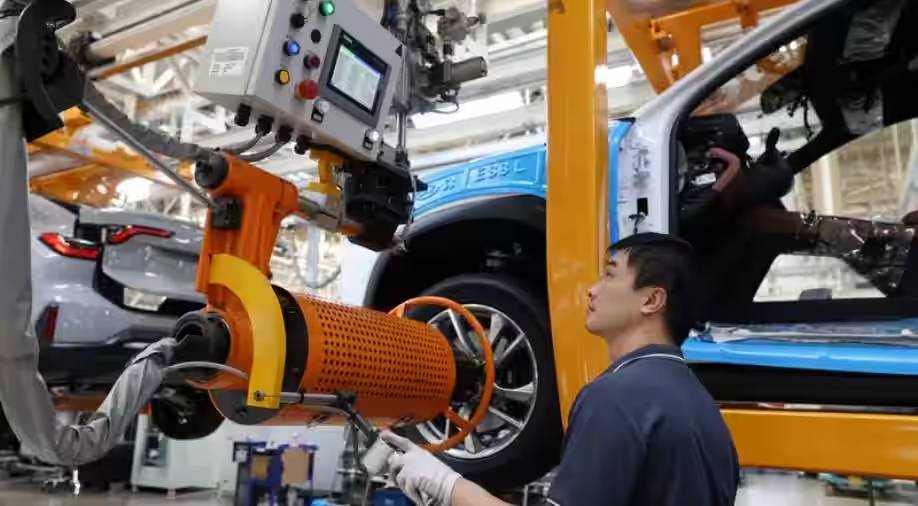
Manufacturing blues in Asia: Global slowdown puts pressure on recovery
Asia’s factory activity experienced a contraction in July, signaling a slowdown in global growth and reflecting the impact of China’s weakening economy on the region’s fragile recovery. Private surveys cited by Reuters revealed that several Asian countries, including Japan, South Korea, Taiwan, and Vietnam, faced challenges due to sluggish Chinese demand.
The Caixin/S&P Global Manufacturing Purchasing Managers’ Index (PMI) for China fell to 49.2 in July from 50.5 in June, marking the first decline in activity since April and falling short of analysts’ expectations of 50.3. The 50-point index separates growth from contraction, and this decline highlights the mounting pressure on policymakers to manage inflation with tight monetary policies while navigating potential headwinds from a recession in the world’s second-largest economy.
Japan, one of the leading economies in the region, experienced a contraction in its manufacturing activity during July, as shown by the final au Jibun Bank PMI, which dropped to 49.6 from 49.8 in June. The weakened activity was attributed to soft orders stemming from weakening global economic conditions and subdued demand from both domestic and overseas markets.
 However, there were some signs of optimism in Japan’s economic outlook. The country’s factory output grew in June for the first time in two months, primarily due to solid auto production. Furthermore, the S&P survey showed that cost pressures for Japanese companies eased, thanks to declining fuel and commodity prices. This provided some relief for manufacturers grappling with slowing demand from foreign markets.
Looking ahead, manufacturers’ output expectations remained positive, with hopes for sustained demand improvements and the pandemic’s fading economic impact. The subindex reflecting output expectations remained consistent with June’s reading, which was the strongest since October 2021.
The challenges faced by Japan and other Asian economies come at a time when the region had been considered one of the few bright spots in the global economy. However, China’s economic slowdown has clouded the overall outlook. In revised forecasts issued in July, the International Monetary Fund projected that emerging Asia’s economic growth would accelerate to 5.3 per cent in 2023 from 4.5 per cent in 2022, while China’s economy is expected to expand by 5.2 per cent this year after a 3.0 per cent increase in 2022.
The situation underscores the delicate balancing act for policymakers, who must address inflationary pressures with tight monetary policies while also supporting economic recovery and growth in the region. Falling new orders, bleak employment prospects, and high inventory levels point to subdued factory activity in the coming months, raising concerns about the durability of the economic recovery in the region.
#modernbusinessnetwork #modernusinessindia #modernbusinessgermany #modernbusinessasia #modernbusinesstimes #modernbusinessgulf #modernbusinessworld #modernbusinesseurope #modernbusinessamerica
